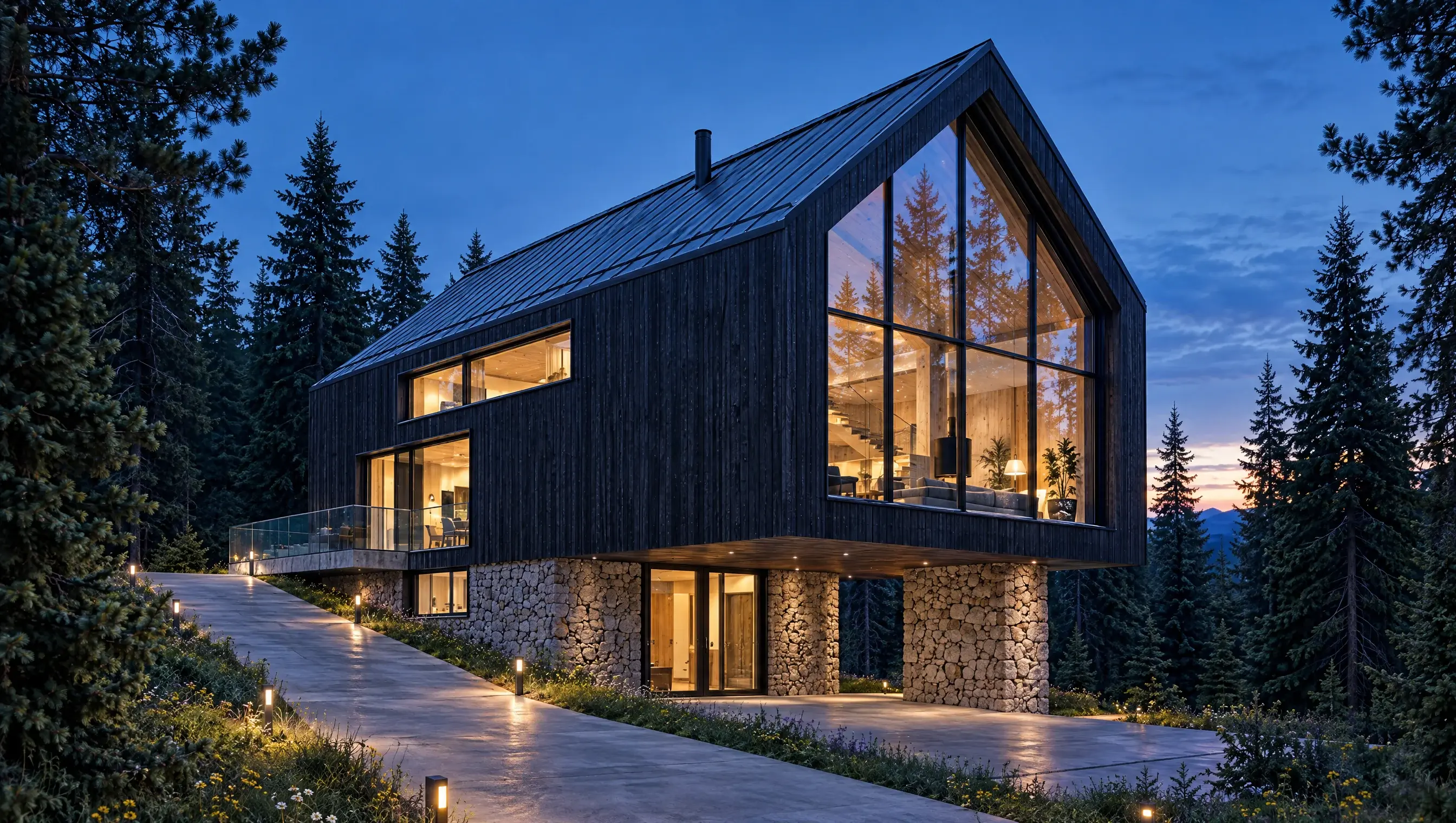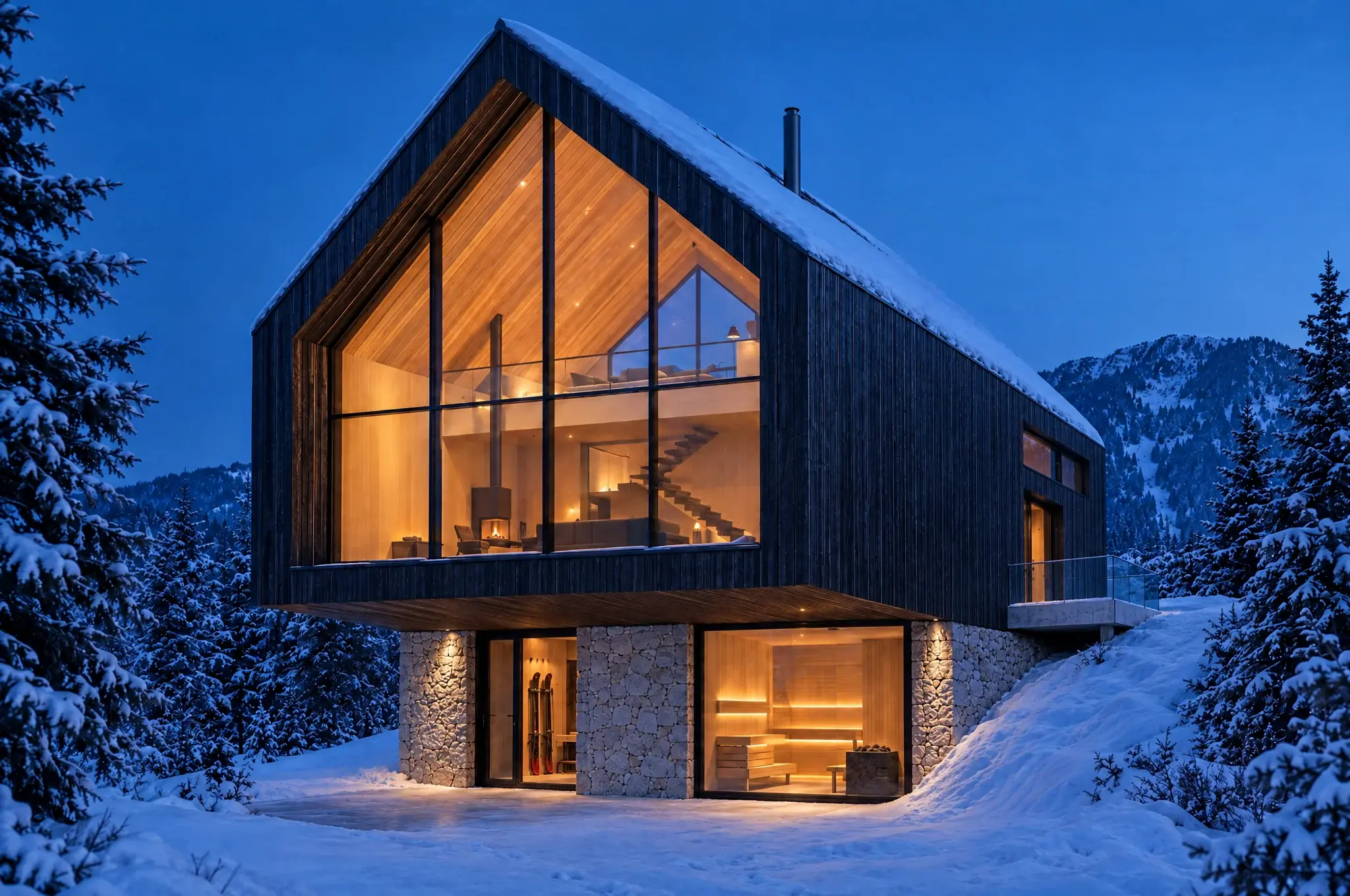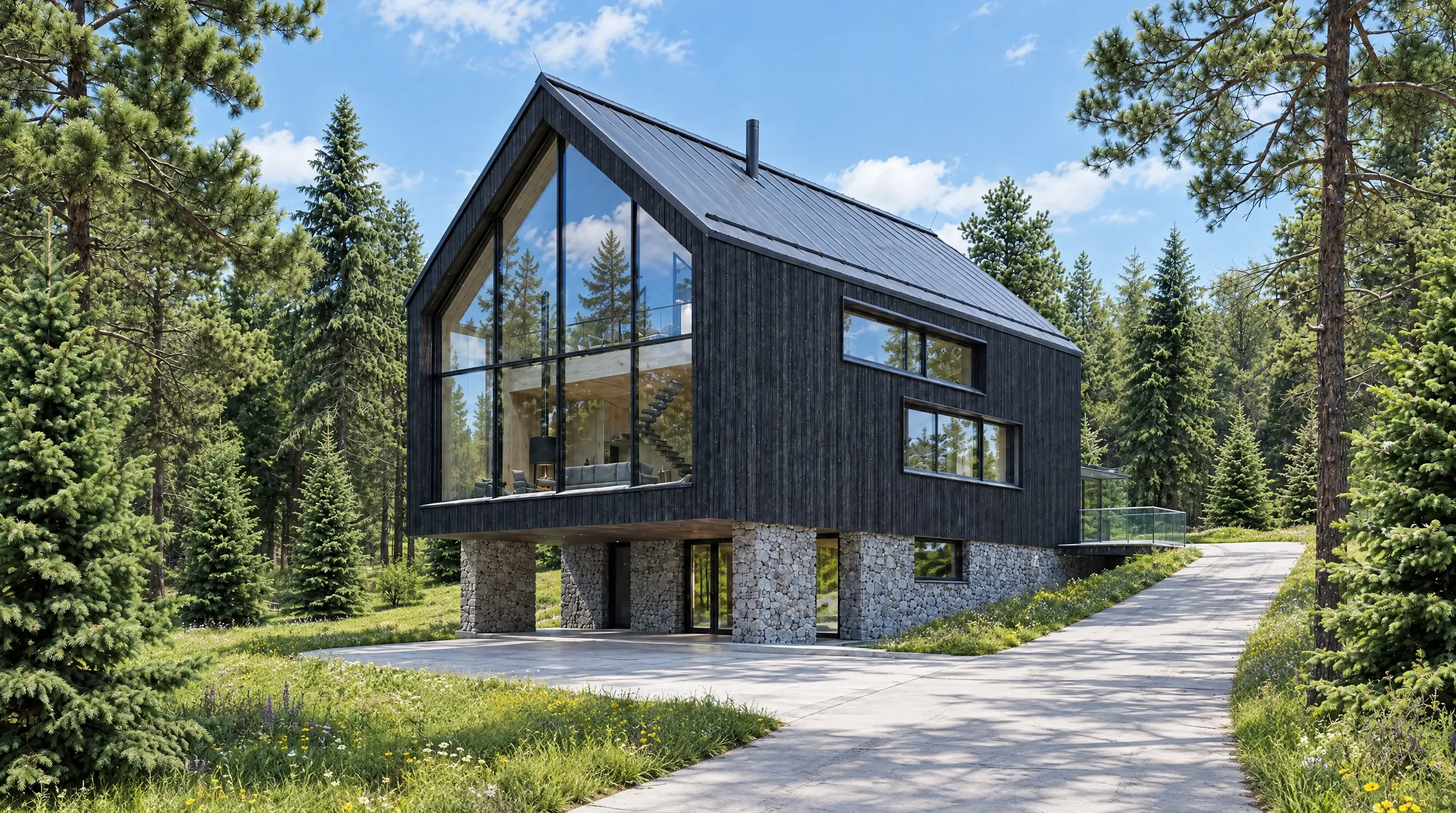
Can a foreigner get a mortgage in Slovakia? Yes, but there is no special Slovakia mortgage for foreigners: no law stops a Slovak bank lending to a non-resident, and each bank decides whose income and residence status it accepts. If you earn in pounds or dollars, compare three routes before you commit: a Slovak euro mortgage, money raised against property in your home country, and cash. This guide sets out the lending limits of the National Bank of Slovakia (NBS) for 2026, the changes from 1 January 2027, interest rates as of August 2026 and the currency risk.
Can a foreigner get a mortgage in Slovakia?
There is no legal bar. A mortgage for a foreign buyer is a commercial decision of the bank, and policies differ. Little is published about lending to foreign nationals; the closest guide is a Slovak broker's overview of mortgages with income from abroad, updated in February 2026 and written mainly for Slovaks working abroad. It reports that:
- income paid in euros is accepted by all but one of the banks it reviews;
- income in other currencies is accepted only by a few banks, some of which count only part of it;
- self-employed income from abroad is generally not accepted;
- banks want a minimum period with your current employer;
- the property pledged to the bank must be in Slovakia.
Treat this as a snapshot, because bank policies change often. A foreign national without Slovak residence is a harder case than a Slovak paid abroad, so ask each bank first whether it lends to non-residents at all. For a UK or US buyer paid in pounds or dollars, the choice is narrow: speak to a Slovak mortgage broker before you reserve a property, not after.
What are the Slovak mortgage limits in 2026?
Every consumer loan secured by a pledge on Slovak real estate is a housing loan under Act No. 90/2016 Coll. (§ 1(2)), whatever the property is used for, so a mountain home is covered exactly like a flat in Bratislava. The limits come from NBS Decree No. 10/2016 and bind lenders in Slovakia; a loan from a lender in your home country follows that country's rules instead.
| Limit | Rule in 2026 | Exemptions |
|---|---|---|
| Loan-to-value (LTV) | Up to 80% of the property value, taken as the lowest of the price, an external valuation and the bank's own valuation | Up to 90% for no more than 20% of a bank's new loans |
| Debt-to-income (DTI) | All your debts up to 8 times your annual net income; less from age 41 if you will still be repaying after 65 | Up to 5% of new loans may exceed it |
| Debt service-to-income (DSTI) | All repayments up to 60% of net income after the subsistence minimum, tested at your rate plus 2 points (up to 6%) | Up to 5% of new loans may reach 70% |
| Maturity | Up to 30 years, repaid in equal monthly instalments or faster | Up to 10% of new housing loans may run longer |
The subsistence minimum (životné minimum) is a statutory monthly amount for the borrower, a spouse and each dependent child, which the bank deducts from your net income before applying the 60% test.
The age rule matters for second-home buyers. If you are over 40 and the loan will run past your 65th birthday, the DTI multiple falls by 0.25 for every year of age above 40: 6.75 at 45, 5.5 at 50, 4.25 at 55 and 3 from 60. A shorter loan that ends by 65 keeps the multiple at 8, but its higher repayment then has to pass the DSTI test.
Illustrative example: what a €320,000 loan requires
You buy a home for an illustrative €400,000, not a NOVALY price, and borrow 80%, or €320,000, over 30 years at 3.73%, the NBS average for loans fixed for one to five years in August 2026.
- Own funds: €80,000, plus the purchase costs.
- Monthly repayment: about €1,478.
- DSTI test: the bank recalculates the repayment at 5.73% over 30 years, about €1,863, which may not exceed 60% of your net monthly income after the subsistence minimum. You would need roughly €3,100 a month after that deduction, more if you have other loans.
- DTI test: €320,000 is eight times €40,000, so you need at least €40,000 of annual net income at 40 or under, or about €58,200 at 50 if the loan runs past 65. Existing debts count towards the total, and the bank will ask about loans you have at home.
Real offers depend on the bank, your income and the rate it quotes you.
What changes from 1 January 2027?
The NBS Bank Board approved new LTV limits on 28 September 2026, phased in from 1 January 2027:
- 90% for borrowers under 35 when no borrower owns a residential property and one purpose of the loan is buying or building a home;
- 70% when the borrowers together already own two or more residential properties, whatever their age or how they use them;
- 80% for everyone else, with the share of exemptions up to 90% cut to 7% of new loans.
DSTI stays at 60%. What counts matters for foreign buyers: banks will check the Slovak cadastre, and only property in Slovakia is counted, so homes you own abroad do not push you into the 70% band. Land, buildings registered in the cadastre for sport and recreation, and the unfinished property being financed do not count either, and a co-ownership share counts only from 50%.
What interest rate can you expect?
NBS publishes average rates on new housing loans every month. They are averages for all borrowers, including refinancing, and a non-resident may be offered different terms.
| Month | Fixed 1 to 5 years | Fixed 5 to 10 years | Floating or up to 1 year | APRC, all new housing loans |
|---|---|---|---|---|
| January 2025 | 3.85% | 2.97% | 4.44% | 3.71% |
| December 2025 | 3.40% | 2.76% | 3.89% | 3.54% |
| June 2026 | 3.66% | 3.14% | 3.58% | 3.91% |
| August 2026 | 3.73% | 3.00% | 3.75% | 3.97% |
Rates fell through 2025 and rose again during 2026. The APRC (annual percentage rate of charge) also includes fees and covers all new housing loans together.
Should you borrow at home instead?
If you own a home in the UK, the US or elsewhere with enough equity, you may be able to raise the money there, by remortgaging, taking a further advance from your current lender or taking out a home equity loan, and then buy in Slovakia as a cash buyer.
- For: a lender, language and paperwork you know; a debt in the currency you earn, so repayments do not move with the exchange rate; no Slovak loan application, no Slovak pledge and only one cadastre fee.
- Against: your main home secures the loan; your home lender's affordability rules and rates apply; and the currency risk moves to the moment you convert the money into euros.
Check that your lender accepts a purchase abroad as the purpose of the loan, and ask an independent mortgage adviser in your country. Owning a second home, even abroad, can also change how your home country taxes you, so ask a tax adviser in your country as well.
What about paying cash?
Cash is the simplest route: no NBS limits, no Slovak loan application, and the price can sit in a notary's or lawyer's escrow until the cadastre registers you as the owner. Our step-by-step guide to buying a new build in Slovakia gives the escrow fees and the order of payments. Expect banks, notaries and lawyers to ask where the money comes from, so keep the paper trail of your savings, sale proceeds or loans at home ready.
How big is the currency risk for GBP and USD earners?
Slovakia uses the euro, so a buyer who earns in pounds or dollars carries exchange-rate risk twice: on the purchase price until it is paid, and on every repayment of a euro mortgage.
Illustrative example, not a forecast: you agree a price of €400,000, pay €80,000 now and €320,000 a year later. If your currency buys 5% fewer euros by then, the balance costs you about 5.3% more:
| Your currency against the euro a year later | Cost of the €320,000 balance in your currency | Difference, valued at the rate when you signed |
|---|---|---|
| 5% stronger | 4.8% less | about €15,200 less |
| 5% weaker | 5.3% more | about €16,800 more |
| 10% weaker | 11.1% more | about €35,600 more |
The same arithmetic applies to a euro mortgage: if your currency falls 10%, the €1,478 monthly repayment from the example above costs you 11.1% more, about €164 a month at the original rate. You can limit the risk by transferring in stages, holding a euro reserve, or fixing the rate for a future payment with a forward contract from your bank or a regulated currency provider. If you let the property, rental income earned in euros also offsets part of a euro repayment.
What else does a Slovak mortgage cost?
- Insurance: the lender may require appropriate insurance but must accept an equivalent policy from another insurer (Act No. 90/2016 Coll., § 4(2)), and it may not tie the loan to other products (§ 4(1)). In practice, banks ask for building insurance with the claim assigned to them (vinkulácia). Since 1 January 2026, non-life premiums carry 10% insurance tax.
- Pledge registration: the mortgage pledge is a separate legal act in the cadastre, costing €100 on paper or €50 electronically (Act No. 145/1995 Coll., item 11).
- Valuation: the bank values the property and lends on the lowest of the price and the valuations, so a low valuation means more of your own money.
For the yearly bills once you own the house, see the cost of owning a ski chalet in Slovakia.
What should you ask a Slovak bank or broker?
- Do you lend to non-residents, and do I need Slovak residence?
- Which income currencies do you accept, and how much of that income do you count?
- Do you accept self-employed or company income from abroad?
- Which of my documents must be translated or carry an apostille?
- Which fixation periods and rates can you offer me?
- Which insurance do you require, and will you accept my own policy?
- When is the loan paid out to the seller of a new build?
Summary
- Foreigners can get a Slovak mortgage, but it is bank policy: euro income is widely accepted, other currencies and foreign self-employed income far less, so ask a broker early.
- In 2026, Slovak lenders may lend up to 80% of the value over at most 30 years; total debt is capped at 8 times annual net income (less from age 41 if you repay past 65) and repayments at 60% of net income after the subsistence minimum. Holiday homes are covered.
- From 1 January 2027: 90% for under-35s without a residential property, 70% for owners of two or more; homes abroad are not counted.
- In August 2026, loans fixed for one to five years averaged 3.73% and the APRC on new housing loans was 3.97% (NBS).
- A loan at home keeps the debt in your currency but is secured on your home; a euro mortgage leaves non-euro earners with exchange-rate risk on every repayment.
- The bank can require insurance, but you may choose the insurer if the cover is equivalent.
If one of NOVALY's chalets in Donovaly is on your shortlist, ask for the price and the payment terms early, so you can line up your financing and currency transfers before you reserve. See the chalets and their floor plans, read our complete guide to buying a ski chalet in Slovakia and can foreigners buy property in Slovakia?, or get in touch; we reply within 24 hours.