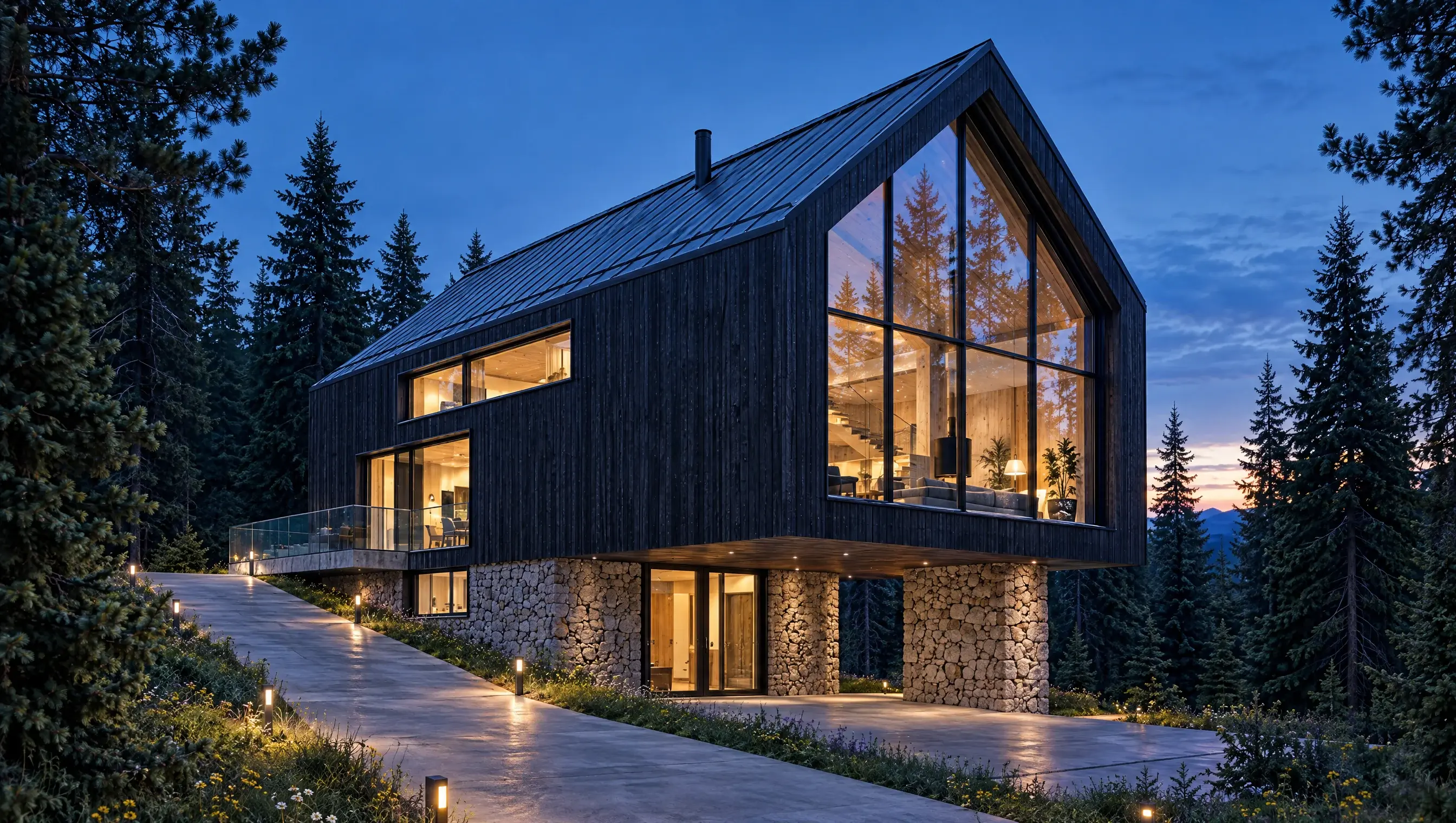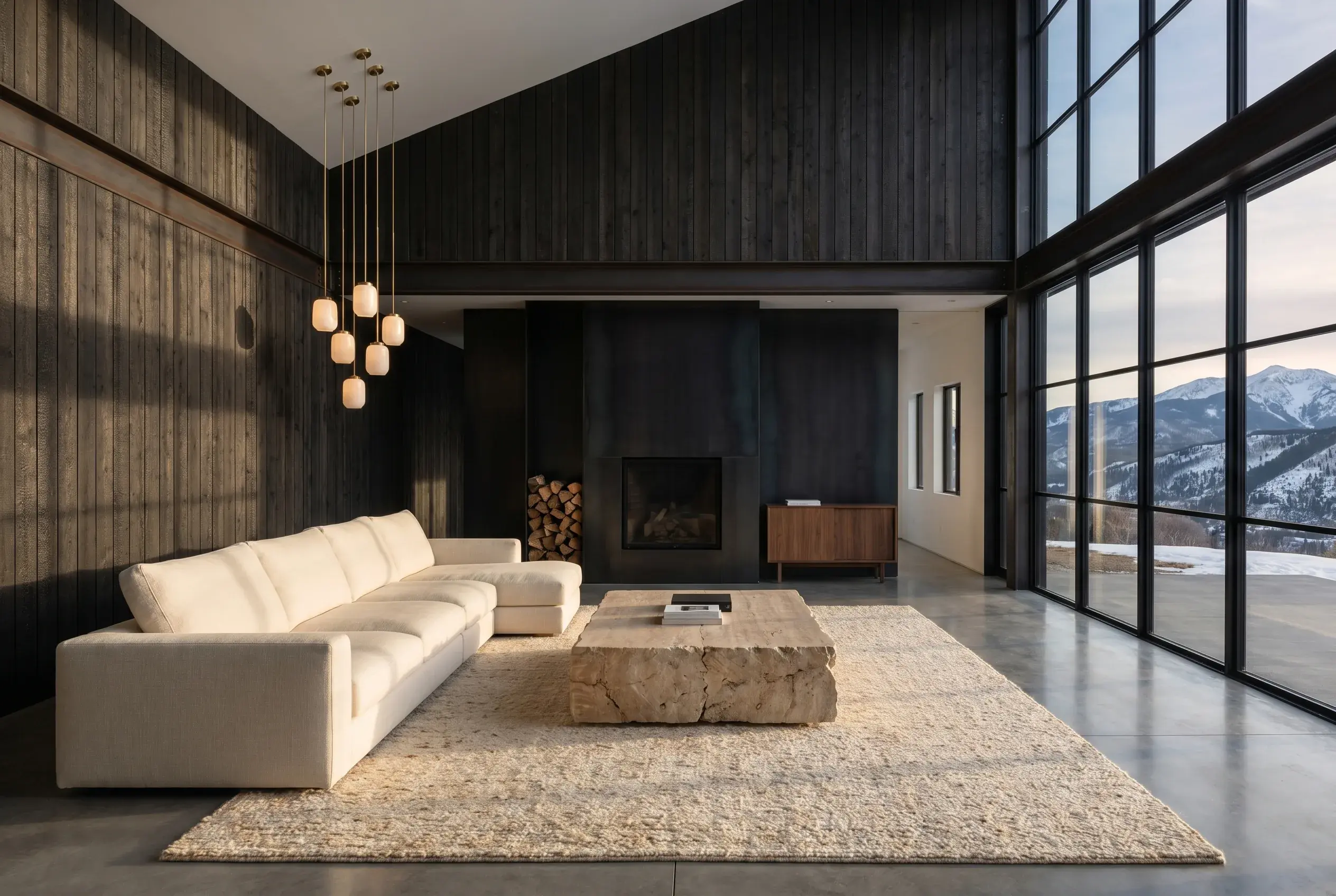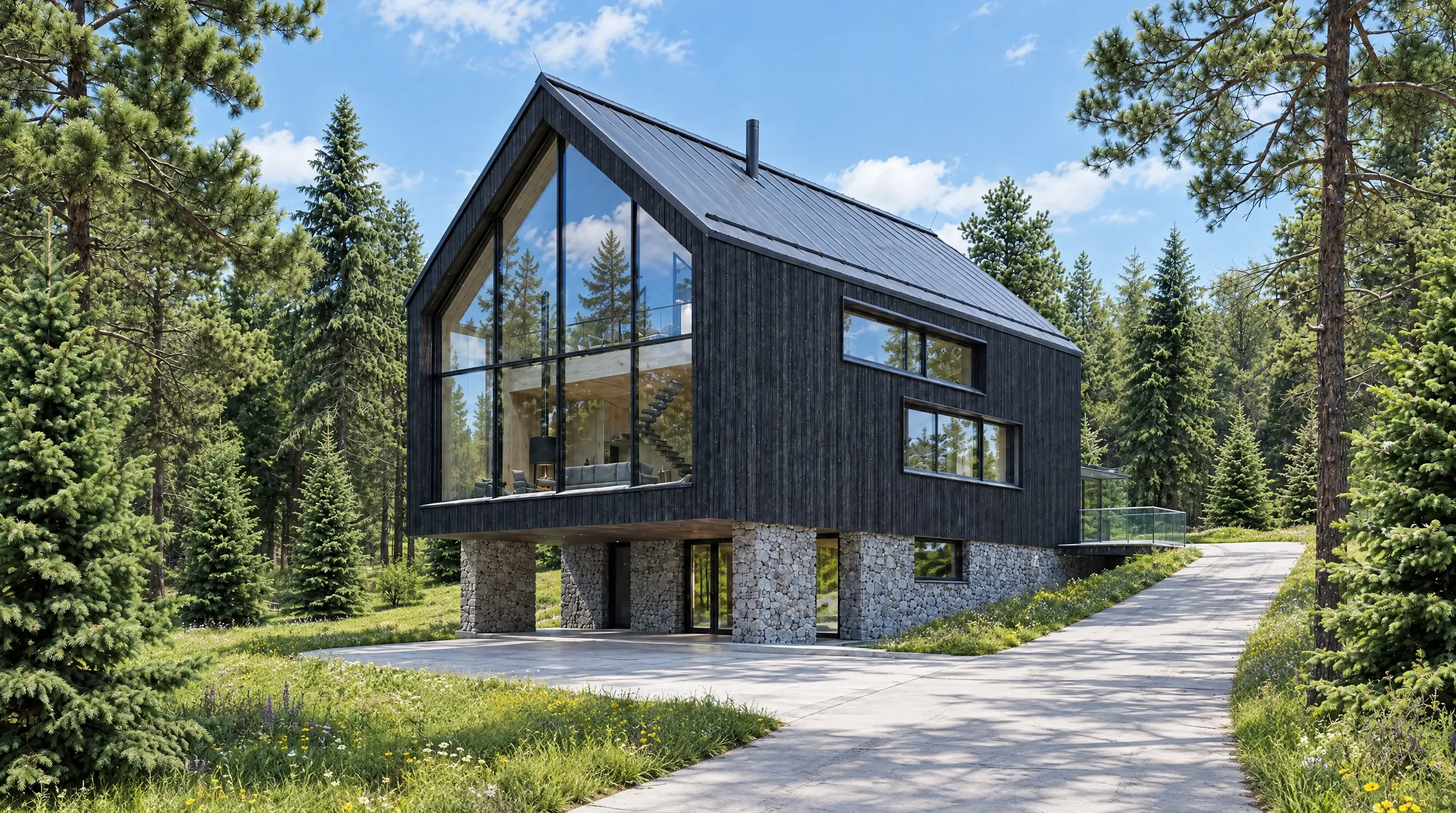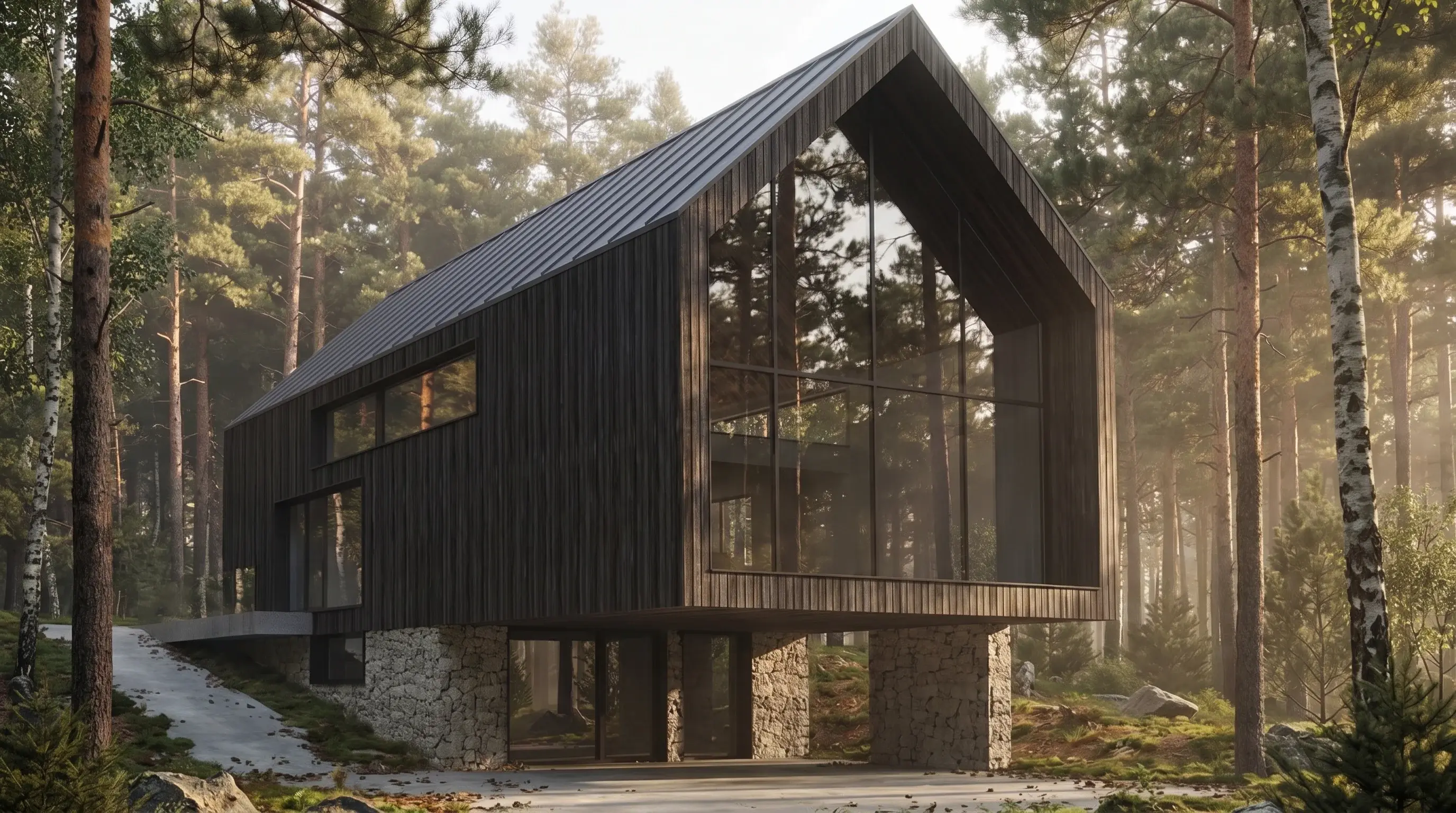
This ski chalet buying checklist covers the 25 things to check before you commit to a new-build mountain home in Slovakia, roughly in the order you will meet them: the land and its title, access and services, permits, the building, contracts and payments, and handover. Most checks cost little before you sign and a great deal afterwards. Slovak terms are given in brackets, so you can ask for the right document by name.
The legal references are valid on 3 October 2026. They tell you what to ask, but your own case still needs a Slovak notary or lawyer, and a tax adviser. For the whole process, read our guide to buying a ski chalet in Slovakia and the step-by-step guide to buying a new build from a developer.
Ski chalet buying checklist: when to do each check
| Stage | Checks | Who can help |
|---|---|---|
| Before you pay a reservation fee | 1 to 9 and 16 | You, a local lawyer, a surveyor |
| Before the future purchase contract | 10 to 15, 17 and 18 | A lawyer or notary, the developer |
| Before the purchase contract | 19 and 20 | A notary or lawyer, your bank |
| At handover | 21 and 22 | A building surveyor, the developer |
| In the first year | 23 to 25 | A tax adviser, an insurer, the municipality |
Title: what does the ownership sheet tell you?
Every property registered in the Slovak land register (kataster nehnuteľností) has an ownership sheet (list vlastníctva). You can view an informative copy online, and your notary or lawyer can obtain an official extract. Start here, because it shows who can sell to you and what comes with the plot.
- Get a fresh ownership sheet. Part A lists the parcels and buildings, part B the owners and part C the encumbrances. Check that the seller in your contract is the registered owner, and copy the parcel numbers, cadastral area and land type exactly into the contract. Ask for a new extract at every contract stage.
- Read part C for pledges and notes. A developer's bank often holds a pledge (záložné právo) over the land while construction is financed. That is normal, but the contract must say how and when the pledge will be released, so that you receive the property free of it. Look also for pre-emption rights and for notes about disputes or enforcement.
- Check easements (vecné bremeno) in both directions. An easement can work for you, such as a right to cross a neighbour's land to reach your plot, or against you, such as a utility company's right to reach a cable or pipe on it. Ask which easements pass to you with the house.
The plot: what do the land type and the zoning plan tell you?
- Confirm the land type (druh pozemku) and the boundaries. House plots are usually registered as built-up areas and courtyards (zastavané plochy a nádvoria) or as gardens. Foreigners from the EU and from outside it may acquire real estate in Slovakia (Act No. 202/1995 Coll., § 19a); special rules cover agricultural land, but land in the built-up area of a municipality and gardens do not count as agricultural land for that purpose (Act No. 140/2014 Coll., § 2(2)). If your plot was split off a larger parcel, ask for the geometric plan (geometrický plán) that defines it. Our guide for foreign buyers of property in Slovakia covers the rules in full.
- Look at zoning and nature protection around the plot. The municipal zoning plan (územný plán) shows what may be built next to you: the meadow you look across today may be a building zone. Ask also which level of nature protection applies, because it can limit extensions, fences or tree felling later; in Donovaly, under Government Regulation No. 189/2026 Coll., in force since 15 July 2026, part of the cadastral area lies in the Low Tatras National Park or its protection zone.
Access, services and ground: will the house work in January?
A mountain plot that is easy to reach in September can be a different place in January. These checks are practical rather than legal, and a winter visit answers most of them.
- Legal access from a public road. The plot needs access either directly from a public road or through a registered easement or a co-owned access road. Ask who owns the access road and who pays for its upkeep.
- Winter access in practice. Ask who clears the access road and how early in the day, how steep the driveway is, where cleared snow goes and where cars park when snowbanks narrow the road. A steep, shaded driveway needs ploughing after every heavy snowfall.
- Utilities: connected, contracted and big enough. Ask for written evidence that water, sewage, electricity and internet are connected or contracted, and who pays the connection fees. Check the reserved electrical capacity, because a sauna, the heating and an electric car charger may all run at once. If sewage goes to a private treatment plant or tank instead of a public sewer, ask who maintains it.
- Ground stability and drainage. On a slope, the foundation design should rest on an engineering-geological survey (inžinierskogeologický prieskum). Ask whether one was made and what it recommended, and how rainwater and snowmelt are led away from the house and any retaining walls. The State Geological Institute of Dionýz Štúr keeps a register of landslides; ask your surveyor whether the plot or the slope above it appears in it.
Permits: is the house approved for what you want to do with it?
- Building category: family house or recreational building. The occupancy approval states what the building is for, and it may be used only for that purpose (Act No. 25/2025 Coll., § 68). The category decides how the property is taxed, whether Slovak banks count the house as residential property under the lending limits that start on 1 January 2027, and whether running it as an accommodation business needs a change of use. Our comparison of ski chalets, apartments and their legal categories explains the differences.
- Building permit and occupancy approval (kolaudácia). Since 1 April 2025, the new Building Act has replaced the occupancy decision with an occupancy certificate (kolaudačné osvedčenie). Buildings that received a zoning decision or building permit under the old law still follow the old law (§ 84(5) and (6)), which means a classic occupancy decision (kolaudačné rozhodnutie). Either way, a new building may be used permanently only after kolaudácia (§ 66 and § 67). Ask which regime applies and when you will receive a copy of the final document.
- Energy performance certificate (energetický certifikát). The owner of a new building must have one by the time the occupancy application is filed, and a seller must hand it to the buyer (Act No. 555/2005 Coll., § 5 and § 8, as in force since 1 April 2025). If you buy before completion, ask for the design energy assessment (projektové energetické hodnotenie) instead. Sale offers must state the building's energy performance indicator, so you can compare houses on it.
The building: is it designed for mountain winters?
- Snow load and roof design. Ask which snow load the roof was designed for and where snow slides off it. Entrances, terraces, parking spaces and paths should not lie where snow falls from the roof. Snow guards and gutters that cope with ice matter more at altitude than in town.
- Heating, hot water and frost protection. Find out what the heating system is, whether it can be monitored and controlled remotely, and what protects the pipes when the house stands empty for weeks. A sauna, hot water for a full house of guests and a wellness room all add demand, so compare the calculated energy need in the certificate rather than brochure claims.
- Specification in writing. The contract or its annex should list the standard of finishes, the equipment included (kitchen, bathrooms, sauna), the plot boundaries and landscaping, and what is not included, with drawings. Anything not written down is open to dispute at handover.
Contracts: how do you protect your payments?
- Reservation agreement (rezervačná zmluva). Slovak law does not name this contract. It is an innominate contract under the Civil Code (Act No. 40/1964 Coll., § 51), and it cannot be used in court to force the sale. With a developer it is a consumer contract, so the unfair-terms protection of § 52 onwards applies. There is no statutory amount for the fee: check how long the reservation runs, whether the fee counts towards the price and when it is refunded.
- Future purchase contract (zmluva o budúcej kúpnej zmluve). It must be in writing and contain the essential terms of the final contract and the date by which it will be signed. If the other side then refuses to sign, you can ask a court within one year to replace their declaration of will (§ 50a). Check the completion date, what happens if it slips, the payment schedule, contractual penalties and any clause that lets the price change.
- Payment security and escrow (úschova). Slovak law does not generally require escrow for advance payments on new builds, so your protection is whatever the contract provides. Prefer payments into notary, lawyer or bank escrow that are released once the cadastre registers you as owner. The notary escrow fee follows a statutory tariff: on an illustrative €400,000 it is €725 plus VAT, or €891.75 with 23% VAT (Decree No. 31/1993 Coll., annex in force since 17 August 2026).
Signing and paying: what happens at the notary and the cadastre?
- Purchase contract and registration. The contract must be in writing, in Slovak or Czech or with an officially certified translation, and the seller's signature must be officially verified unless the contract is a notarial deed or authorised by a lawyer (Act No. 162/1995 Coll., § 42). Ownership passes only when the cadastre registers the transfer (vklad) and the decision becomes final. The office decides within 30 days, within 20 days for a notarial deed or a contract authorised by a lawyer, or within 15 days in expedited proceedings (§ 32). Since 1 January 2025 the fee is €100 on paper or €50 electronically per legal act (Act No. 145/1995 Coll., item 11). There is no 14-day cooling-off period for real estate (Act No. 108/2024 Coll.).
- Currency and transfer planning. The price is fixed in euros. If your savings or your mortgage are in pounds, dollars or another currency, the exchange rate between signing and each payment is your risk, so ask your bank or a currency specialist about fixing the rate for the payment dates in the contract. Notaries and banks carry out anti-money-laundering checks: prepare evidence of where the money comes from and allow time for international transfers. If you need a loan, read our guide to financing a mountain home in Slovakia first.
Handover: what should you record when the house is finished?
- Handover protocol (preberací protokol). Inspect the house with the developer, ideally with your own building surveyor, and list every visible defect with a deadline for its repair. Record the meter readings and keys, and list the documents you receive: the occupancy approval, the energy certificate, as-built documentation, manuals and equipment warranties.
- Defects and the 24-month rule. When you buy a house, you must notify defects to the seller without undue delay and at the latest within 24 months of taking it over, otherwise your rights lapse (Civil Code, § 599). The consumer rules that presume a defect existed at purchase apply to movable goods, not to houses. The five-year period in the Commercial Code (§ 562) governs the developer's contract with the builder, so ask for a contractual guarantee, or an assignment of the developer's claims against the builder, if a longer period matters to you.
After handover: which rules apply to you as an owner?
- Rental readiness. If you plan to let the chalet, check that its approved use allows it. From 1 January 2027 a unit offered on Airbnb, Booking.com or another platform needs a registration number from the short-term rental register (called eTurista in Slovak media; Act No. 133/2026 Coll.); hosts already listing by 31 December 2026 must register by 28 February 2027. Our guide to Slovakia's short-term rental rules covers income tax, the Donovaly accommodation tax and police reports for foreign guests.
- First-year tax and insurance. The property tax return is due by 31 January of the year after you acquire the house, because the tax liability arises on 1 January following the purchase (Act No. 582/2004 Coll., § 18 and § 99a). Insure the building from the day you take over the keys; a lender may require it. Our guide to the cost of owning a ski chalet shows what to budget each year.
- The exit and the five-year rule. A sale is exempt from Slovak income tax only after five years from acquisition, and money received under a future sale contract signed within those five years does not qualify (Act No. 595/2003 Coll., § 9(1)(a)). Your home country may tax the gain too, so ask a tax adviser in your country.
Summary
- Start with a fresh ownership sheet: the owner, pledges, easements and land type define what you are really buying.
- Check access, utilities, drainage and snow in winter conditions, not only on a summer viewing.
- Ask which building regime applies, when the occupancy approval will come and what the energy certificate says.
- Protect your money with a future purchase contract and escrow; a reservation alone obliges nobody to sell.
- Record defects at handover, notify the rest within 24 months, and plan tax, insurance and the 2027 rental register before you need them.
NOVALY is a project of six new-build chalets of one design in Donovaly, each 254.4 m² over three levels on a plot of 469 to 678 m². Bring this checklist to a viewing and ask us any of the 25 questions; floor plans and current availability are on the chalets page.