You can buy property in Slovakia as a foreigner on the same legal terms as a Slovak buyer, and you can do most of it from abroad. This guide shows how, step by step, for a new build bought from a developer: from the reservation to your registration as the owner and the handover of the keys. Each step comes with the law, fee or deadline in force on 3 October 2026, and two boxes further down explain the Slovak terms you will meet and the points that catch out buyers used to other systems.
What do you need to buy property in Slovakia as a foreigner?
Any foreigner, from the EU or outside it, may buy real estate in Slovakia under § 19a of the Foreign Exchange Act (Act No. 202/1995 Coll.); the main exception is agricultural land, which rarely concerns a house plot. Our guide can foreigners buy property in Slovakia? covers the rules for UK, US and other buyers. What you need before you start is practical rather than legal:
- a valid passport;
- a Slovak lawyer (advokát) who works in English and acts only for you;
- a financing plan: a Slovak mortgage, a loan at home or cash (see financing a home in Slovakia from abroad);
- the ownership sheet (list vlastníctva) of the plot, to see who owns it and what encumbrances it carries.
You need no Slovak tax number to buy, and a Slovak bank account is not a legal requirement, although it makes escrow, a Slovak mortgage and local taxes easier.
How long does it take, and what does it cost?
| Step | What happens | Deadline or timing | Typical cost |
|---|---|---|---|
| 1. Reservation | Reservation agreement and deposit | As agreed | Deposit as agreed |
| 2. Future purchase contract | Binding promise to sign the purchase contract later | During construction | Lawyer's fee |
| 3. Payments | Into escrow or by the agreed schedule | As agreed | Notary escrow on €400,000: €725 plus VAT |
| 4. Building approval | Final inspection, energy certificate | Set by the building office | Developer's cost |
| 5. Purchase contract | Signed; the seller's signature verified | Usually after the approval | Lawyer's fee |
| 6. Cadastre | Application for registration | 30 days; 20 for a notarial deed or lawyer-authorised contract; 15 expedited | €100 paper or €50 electronic |
| 7. Handover | Protocol, keys, documents | As agreed | None |
| After purchase | Report defects; file real estate tax return | Within 24 months of takeover; by 31 January of the next year | Local tax rate |
Step 1: the reservation agreement (rezervačná zmluva)
A purchase from a developer usually starts with a reservation: you pay a deposit and the developer takes the house off the market for an agreed period. Slovak law does not define this contract. It is an innominate contract under § 51 of the Civil Code (Act No. 40/1964 Coll.), and unlike the agreement in step 2, it does not let you ask a court to enforce the sale. Because the developer is a business and you are a consumer, the Civil Code's protection against unfair terms applies (§ 52 and following).
No statute fixes the deposit. Read three points closely: exactly what is reserved (the house, the plot and their parcel numbers); the price and whether it includes VAT; and when the deposit is refunded, kept or credited to the price.
Step 2: the future purchase contract (zmluva o budúcej kúpnej zmluve)
This is the contract that binds both sides while the house is being built. Under § 50a of the Civil Code, it must be in writing, contain the essential terms of the future purchase contract and set a date by which that contract will be signed. If the other side refuses to sign by then, you can ask a court, within one year, to replace their consent with a judgment. The obligation lapses only if circumstances have changed so much that signing cannot fairly be required.
Ask your lawyer to check that it fixes:
- the house and the plot, with floor plans and a written specification;
- the price, the VAT and the payment schedule;
- a target date for the building approval, and what happens if it slips;
- the standard of the house at handover, and any guarantee beyond the statutory one (see step 7).
Step 3: payments and escrow (úschova)
Slovak law has no general scheme that ring-fences money paid to a developer before completion, so your protection is what the contract says. The usual tool is escrow: the price, or a part of it, is deposited with a notary (notárska úschova), a lawyer (advokátska úschova) or a bank, and released to the seller when an agreed condition is met, typically the registration of your ownership. With a mortgage, the bank often pays the seller only once its pledge is registered.
Notary escrow fees follow a sliding tariff (Decree No. 31/1993 Coll., annex in force from 17 August 2026), plus VAT if the notary is VAT-registered. Illustrative prices, not NOVALY prices:
| Purchase price | Notary escrow fee | With 23% VAT |
|---|---|---|
| €400,000 | €725 | €891.75 |
| €600,000 | €875 | €1,076.25 |
| €800,000 | €975 | €1,199.25 |
A lawyer's escrow fee is agreed by contract. If you pay from pounds or dollars, time your currency transfers around the payment dates; our financing guide shows what a 5% move in the exchange rate does to the price.
Step 4: the building approval (kolaudácia)
A new house may be used permanently only after its final building approval. Under the Building Act (Act No. 25/2025 Coll.), in force since 1 April 2025, the procedure ends with an occupancy certificate (kolaudačné osvedčenie) rather than the former decision (kolaudačné rozhodnutie), after an inspection of the finished building (§ 66, § 67). A transitional rule matters for projects started earlier: if a building received its zoning decision or building permit under the old law, the old law also governs its final approval, which still ends with a kolaudačné rozhodnutie (§ 84(5),(6)). Ask the developer which regime applies, and for a copy of the final document.
The application must include an energy performance certificate (§ 66(2)(j)), and the seller must hand the certificate over on sale (Act No. 555/2005 Coll., § 8). The building may be used only for the purpose stated in its approval (§ 68), so if you plan holiday lets, check how they fit; our guide to short-term rental rules in Slovakia covers registration and tax.
Step 5: the purchase contract (kúpna zmluva)
Once the house is approved and can be identified in the cadastre, you sign the purchase contract. The law sets the form, not the commercial terms:
- Written form, with both parties' declarations on the same document (Civil Code, § 46).
- Language: Slovak or Czech, or with an officially certified translation (úradne osvedčený preklad) (Cadastral Act, Act No. 162/1995 Coll., § 42(1)). Bilingual Slovak and English contracts are common; the Slovak text is the one registered.
- Identification: your name, birth surname, date of birth, Slovak birth number if you have one, and permanent address; the parcels by number, cadastral area, land type and area; the house by its registration number (súpisné číslo) (§ 42(2)).
- Signatures: the seller's must be officially verified (§ 42(3)); yours need not be. No verification is needed if the contract is a notarial deed or authorised by a lawyer, which means a Slovak lawyer has drawn it up, verified the parties' identity and checked it against the law; an authorised contract also shortens the cadastre's deadline (see step 6).
- VAT and taxes: a new house sold by a VAT-registered developer carries 23% VAT (Act No. 222/2004 Coll., § 38(1)). There is no reduced rate for private housing and no real estate transfer tax.
- No cooling-off period: the 14-day withdrawal right for distance and off-premises contracts does not apply to the transfer of real estate (Act No. 108/2024 Coll.).
Step 6: registration in the cadastre (návrh na vklad)
Signing does not make you the owner. Ownership passes only when the cadastral department of the district office registers the transfer (vklad), with effect from its final decision (Cadastral Act, § 28). Your lawyer or notary can file the application for you.
| Fee per legal act | Paper application | Electronic application |
|---|---|---|
| Standard | €100 | €50 |
| Expedited, decision within 15 days | €300 | €150 |
These fees have applied since 1 January 2025 (Act No. 145/1995 Coll., item 11); the older €66 and €33 still appear online, even on some official pages. A purchase and a mortgage pledge are two legal acts, so two fees.
The office must decide within 30 days, within 20 days if the contract is a notarial deed or authorised by a lawyer, and within 15 days in expedited proceedings (§ 32). The clock stops while proceedings are interrupted, for example over a missing document or an unpaid fee. Electronic filing needs a qualified electronic signature from every party, or a paper contract converted into electronic form by a notary or lawyer (zaručená konverzia).
Step 7: handover and defects
At handover, you and the developer sign a handover protocol (preberací protokol) recording the keys, the meter readings and any visible defects: the snagging list, in British terms. Collect the documents at the same time, above all the energy performance certificate, the building approval and any guarantee you were given.
Defects fall under the Civil Code's general rules on sale. You must notify a defect without undue delay and at the latest within 24 months of taking over the house, or the rights lapse (§ 599). For a defect the seller did not disclose, you can claim a price reduction, and you can withdraw if the defect makes the house unusable or the seller's assurances prove untrue (§ 597, § 600); damages remain available. The often-quoted five-year period comes from the Commercial Code (Act No. 513/1991 Coll., § 562) and governs the contract between the developer and its builder, not your purchase, unless the developer gives you a contractual guarantee. Ask for it in writing. Our ski chalet buying checklist lists what to inspect.
Can you buy property in Slovakia without travelling there?
Every step above can be taken through a representative, usually your Slovak lawyer acting under a power of attorney (plnomocenstvo).
- Verification: the cadastre asks for a verified signature on a power of attorney only on the seller's side (§ 42(3)), but notaries, lawyers and banks usually want the buyer's verified too.
- Signed abroad: a signature verified by a notary in the UK or the US needs an apostille. Treaties with countries such as the Czech Republic, Poland and Austria waive this, though the Slovak Ministry of Justice advises checking with the authority in advance.
- Signed in Slovakia: if you visit anyway, a Slovak notary verifies a signature for €4 plus VAT, and no apostille is needed.
- Translations: a document for the cadastre that is not in Slovak or Czech needs an officially certified translation, so ask for a bilingual power of attorney.
Summary
- Foreigners buy property in Slovakia on the same legal terms as Slovaks, and a lawyer with a power of attorney can handle every step.
- A new build usually runs: reservation, agreement on a future purchase contract, escrow payments, building approval, purchase contract, cadastre, handover.
- Only the agreement on a future purchase contract (§ 50a) makes the sale enforceable; the reservation does not.
- The cadastre charges €100 on paper or €50 electronically per legal act and decides within 30 days, 20 for notarial or lawyer-authorised contracts, or 15 if expedited.
- Defects must be notified within 24 months of takeover; get any longer guarantee in writing.
- Documents signed in the UK or the US need an apostille, and the cadastre needs Slovak, Czech or a certified translation.
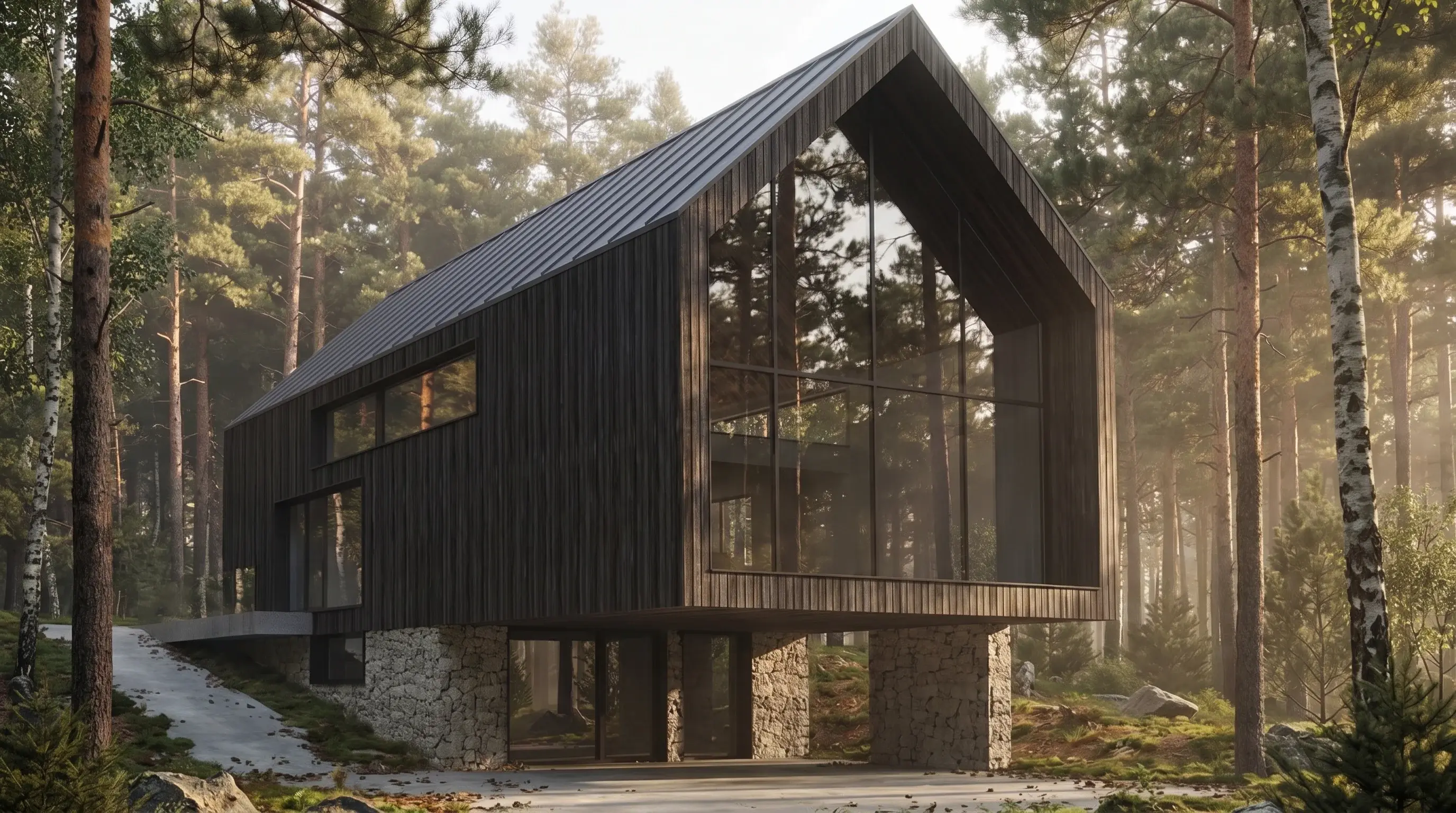
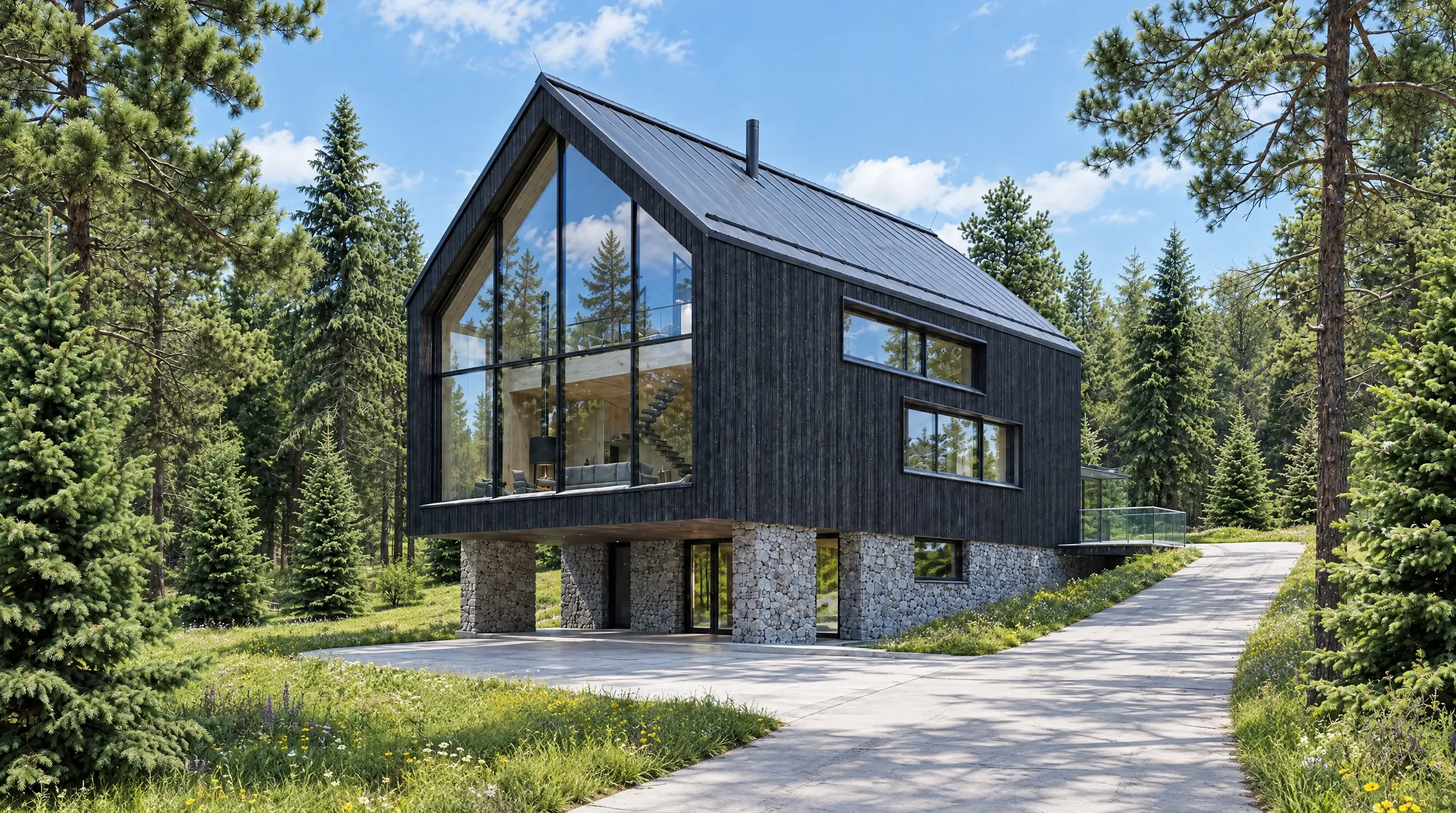
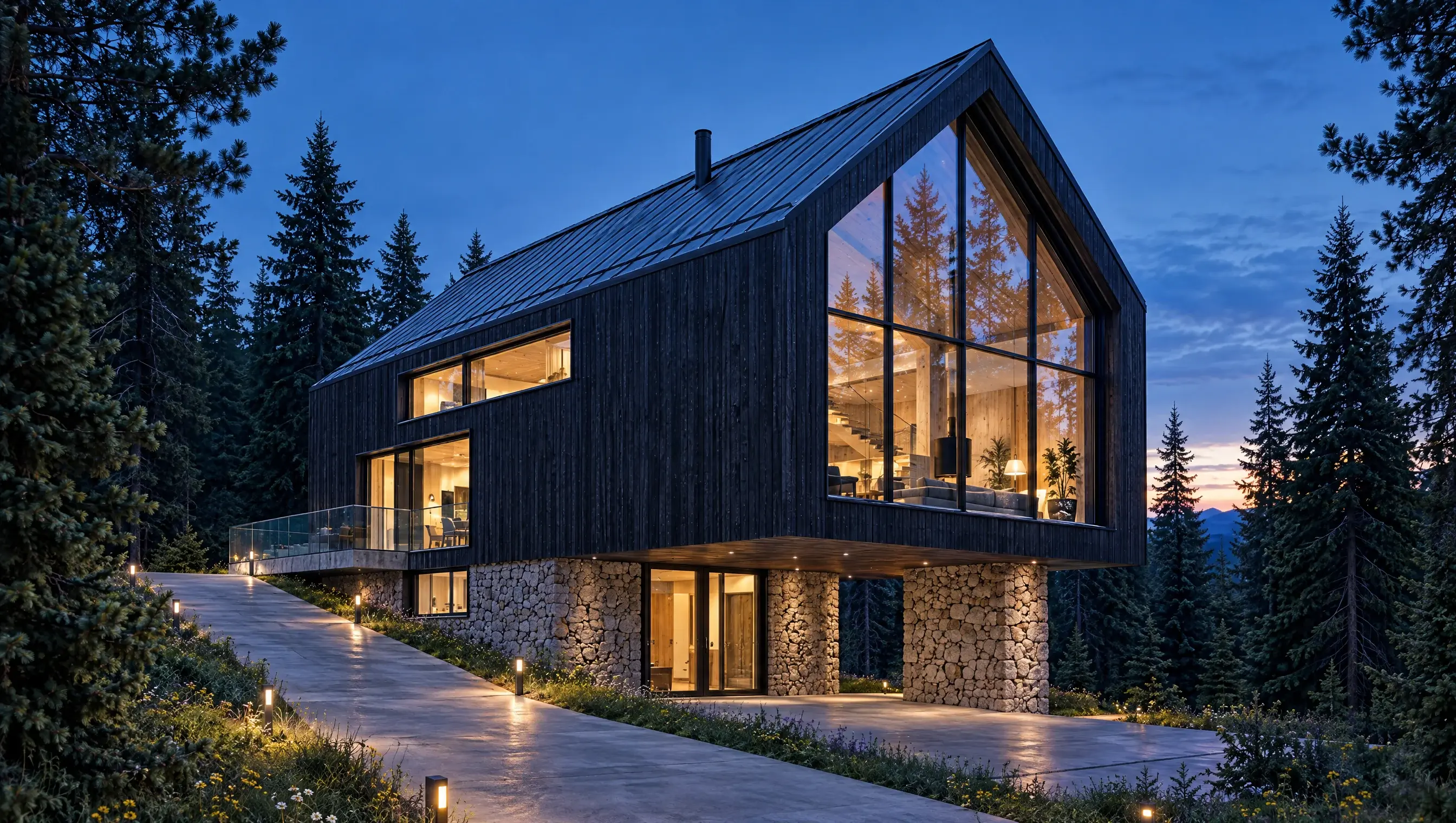
NOVALY's six chalets in Donovaly are developed by MM-group s.r.o. and share one house design: 254.4 m², four bedrooms, on plots from 469 to 678 m². The questions in this guide are the right ones to ask us too. See the chalets, the site plan and the floor plans, read our complete guide to buying a ski chalet in Slovakia, or arrange a viewing; we reply within 24 hours.