Slovakia Airbnb rules change on 1 January 2027: from that date, every holiday home offered on Airbnb, Booking.com or another online platform needs a registration number from a new short-term rental register (called eTurista in Slovak media). The rest of the rulebook applies already. Rental income from Slovak property is taxed in Slovakia, the municipality charges a tourist tax (in Donovaly €2 per person per night), and every foreign guest must be reported to the police within five days of check-in.
This guide explains each rule for owners who live abroad, with the law behind it, and ends with a checklist for your first guest. It reflects the law on 3 October 2026. Your own setup, especially income tax and VAT, needs a Slovak tax adviser, and the home side needs a tax adviser in your country. If you are still choosing a property, start with our guide to buying a ski chalet in Slovakia.
Slovakia's Airbnb rules from 2027: the new rental register
Act No. 133/2026 Coll., adopted on 2 June 2026, creates a national register of units used for short-term accommodation and takes effect on 1 January 2027. It provides the registration procedure behind Regulation (EU) 2024/1028 on short-term rental data, which has applied since 20 May 2026. The Ministry of Tourism and Sport runs the register and publishes part of it on its website, including each unit's registration number (§ 3). The Act itself does not use the name eTurista; it speaks only of "the register".
"Short-term" means any rental of accommodation for less than one year (§ 1(2)). The duty is tied to online platforms: before you first offer a unit through one, you must enter it in the register, which issues a unique registration number (§ 4(3), § 5(1)). A unit without a valid number may not be offered on a platform, and the ministry can order the platform to remove the listing (§ 5(2) and (3)). If you take bookings only directly, without any platform, this register does not apply to you, but the tax, tourist tax and guest reporting rules below still do.
The register asks for details of the unit (address, ownership sheet number, cadastral area and parcel, maximum beds and guests) and of you as the host, including a tax identification number (§ 4). That is one more reason to sort out your Slovak tax registration early.
When must you register, and what are the fines?
| Rule | What it means | Act No. 133/2026 Coll. |
|---|---|---|
| Who | Hosts offering a unit through an online platform | § 5(1) |
| When | Before the first listing; existing hosts by 28 February 2027 | § 5(1), § 14 |
| Cost | Registration, changes and deletion are free | § 5(10) |
| How | Online; individuals can also register in person at the ministry | § 5(5) |
| Changes | Within 30 days; delete the unit within 30 days after you stop letting it for good | § 5(4), § 5(7) |
| Fines for individuals | €100 to €1,000, up to double for a repeat within five years | § 10 |
| Fines for businesses | €1,000 to €3,000, up to double for a repeat | § 11 |
| Fines for platforms | €3,000 to €30,000 | § 11 |
Hosts who already offer units on platforms by 31 December 2026 must register by 28 February 2027, and the duties and fines do not apply to them until then (§ 14). After registration the ministry can check your data and suspend the number if you do not correct errors (§ 6).
Do you need a trade licence, or is it rental income?
Slovak law separates plain renting from an accommodation business. Renting real estate becomes a trade (živnosť) when you provide more than basic services with it (Trade Licensing Act, Act No. 455/1991 Coll., § 4(1)), and "accommodation services without catering" is a free trade that needs no professional qualification. Short stays with fresh linen, cleaning and check-in are, in practice, accommodation services; a long let to one tenant with basic services is normally not a trade.
The difference shows in your tax:
- Plain rental income (Income Tax Act, Act No. 595/2003 Coll., § 6(3)): you deduct only actual, documented expenses, and the €500 exemption applies.
- Business income (§ 6(1) and (2)): if you are not a VAT payer, you can claim flat-rate expenses of 60% of income, capped at €20,000 (§ 6(10)), and a 15% rate applies when business income in the year does not exceed €100,000 (§ 15). Social and health insurance contributions for the self-employed may then apply too.
Whether a foreign owner should hold a Slovak trade licence, rent through a company or hand the chalet to a Slovak operator is a structuring question for a Slovak tax adviser or lawyer.
How is rental income from a Slovak property taxed?
Income from renting property located in Slovakia is taxable in Slovakia, even when you live abroad. Double tax treaties generally give the country where the property lies the right to tax this income, and your home country then gives relief under its own rules; ask a tax adviser in your country how to report it there.
On the Slovak side, the main rules for an individual are:
- Register with the tax office, if you are not registered already, by the end of the month after the month in which you started renting (Act No. 595/2003 Coll., § 49a(2)).
- The first €500 a year is exempt. Above that, only the excess is taxed and expenses are reduced in the same proportion (§ 9(1)(g)).
- Only actual, documented expenses count against plain rental income, such as depreciation, energy, repairs, interest and local taxes, apportioned to the rental use; the 60% flat rate is reserved for business income (§ 6(10)).
From tax year 2026, Slovakia has four income tax rates (Act No. 261/2025 Coll., amending § 15):
| Part of the annual tax base | Rate |
|---|---|
| Up to €43,983.32 | 19% |
| From €43,983.32 to €60,349.21 | 25% |
| From €60,349.21 to €75,010.32 | 30% |
| Above €75,010.32 | 35% |
The thresholds are tied to the subsistence minimum, so the euro amounts will be recalculated for 2027.
Illustrative example (assumptions, not a forecast): gross rent of €20,000 a year, documented expenses of €8,000 and no other Slovak income. After the €500 exemption, €19,500 is taxable and the expenses fall in the same proportion to €7,800. The tax base is €11,700, and Slovak income tax at 19% is €2,223, before any allowances.
Do foreign owners have to register for VAT?
Accommodation carries the reduced VAT rate of 5% since 1 January 2025 (VAT Act, Act No. 222/2004 Coll., § 27 and Annex 7a). Whether you must charge it depends on where you are established:
- Owners resident in Slovakia become VAT payers only above a turnover threshold: from 1 January of the following year if turnover in the previous calendar year exceeded €50,000, or immediately with the supply that takes the current year above €62,500 (§ 4).
- Owners with no seat or residence in Slovakia have no threshold. They become VAT payers with their first supply subject to VAT in Slovakia, such as short-term accommodation (§ 5(1)). Owners established in another EU country may be able to use the EU cross-border scheme for small businesses (§ 68f, EU-wide turnover up to €100,000, registered through the home country). The scheme is built for EU businesses, so owners from the UK, the US or elsewhere outside the EU should not count on it.
Long-term rental of a house, by contrast, is exempt from VAT (§ 38).
Does Slovakia have a tourist tax? The Donovaly rules
Yes. Slovak municipalities may levy a local accommodation tax (daň za ubytovanie) on paid overnight stays, in chalets and family houses as well as hotels (Local Taxes Act, Act No. 582/2004 Coll., § 37 to § 43). The guest owes the tax; you as the host collect it and pay it to the municipality (§ 38).
In Donovaly the rate is €2 per person per night since 1 January 2025, under the municipal ordinance VZN 2/2024. If you opt for it, you can instead pay a flat €40 per bed per calendar year (§ 41d). The per-night tax counts at most 60 nights per guest with the same host in a calendar year (§ 39).
- Per night: 8 guests staying 3 nights make 24 overnight stays, so €48 in tax.
- Flat rate: €40 equals 20 overnight stays at €2, so the flat rate costs less once each bed is used for more than 20 nights a year.
You must notify the municipality of your accommodation capacity no later than the day the first guests arrive, and keep a register of guests for the tax (§ 41a); under the flat rate, that tax register is not required (§ 41d). According to the municipality's 2025 form, the statement and payment are due by the 15th day after the end of each month; confirm the current procedure with the municipal office. Platforms can collect the tax as the host's representative (§ 38(3), § 41c), but do not assume yours does so in Donovaly. Under the 2023 ordinance (VZN 2/2023), hosts pay the municipal waste fee per bed, €35 a year, rather than per property; ask whether this still applies.
What must you record about guests, and when must the police know?
Two separate duties apply to every stay, whether or not you hold a trade licence:
- Guest book (kniha ubytovaných): anyone providing accommodation under an accommodation contract must record each guest's name, ID card or passport number, permanent address and length of stay (Act No. 253/1998 Coll., § 24(1)).
- Police report for foreign guests: for every guest who is not a Slovak citizen, EU citizens included, you must verify their identity, record nationality and date of birth, and make sure the official stay-report form reaches the police within five days of check-in. It can be submitted electronically (Act No. 404/2011 Coll., § 113). Guides that mention three working days are out of date.
Do Airbnb and Booking.com report your income?
Yes. Under the EU's DAC7 rules (Council Directive (EU) 2021/514), digital platforms report hosts' income to the tax authorities. Assume the Slovak tax office can see what you earn through platforms, and keep your own records consistent with the platform statements.
What else should you check before you rent?
- Permitted use: a building may be used only for the purpose in its occupancy approval, and turning a family house into a building used mainly for an accommodation business may need a change of use (Act No. 25/2025 Coll., § 68).
- Public health: an entrepreneur operating accommodation must prepare operating rules and submit them to the regional public health authority (Act No. 355/2007 Coll., § 21). Ask the authority in Banská Bystrica how this applies to a single chalet.
- Fire safety: have a fire-protection technician check the house and the escape routes.
- Insurance: tell your insurer that the house is let to guests and get the cover confirmed in writing.
Before you buy, our ski chalet buying checklist shows how to check the approved use of a building.
Checklist before your first guest
- Check the approved use in the building's occupancy approval.
- Decide with a Slovak tax adviser whether you rent as plain rental income, as a business or through a Slovak operator.
- Register with the Slovak tax office by the end of the month after the month you start renting.
- Confirm your VAT position before you accept the first booking.
- From 1 January 2027, register the unit and show the registration number in every listing; if you list it already, register by 28 February 2027.
- Notify the municipality of Donovaly of your capacity before the first stay, choose per-night or flat-rate accommodation tax and set up the monthly statement.
- Set up the guest book and a routine for reporting foreign guests to the police within five days.
- Confirm in writing that your insurance covers short-term guests.
- Have the fire safety checked and write house rules for heating, the sauna and snow.
- Keep every invoice, because only documented expenses reduce plain rental income.
- Ask a tax adviser in your country how to report the Slovak income and claim relief at home.
Summary
- From 1 January 2027, a unit listed on an online platform needs a registration number under Act No. 133/2026 Coll.; existing hosts must register by 28 February 2027, free of charge.
- Rental income from Slovak property is taxed in Slovakia, at 19% to 35% in 2026 after a €500 exemption; register with the tax office by the end of the following month.
- Foreign owners can owe 5% VAT on accommodation from the first booking, so take advice before you list.
- Donovaly charges an accommodation tax of €2 per person per night or, if you opt for it, a flat €40 per bed per calendar year.
- Keep a guest book for everyone and report every non-Slovak guest to the police within five days.
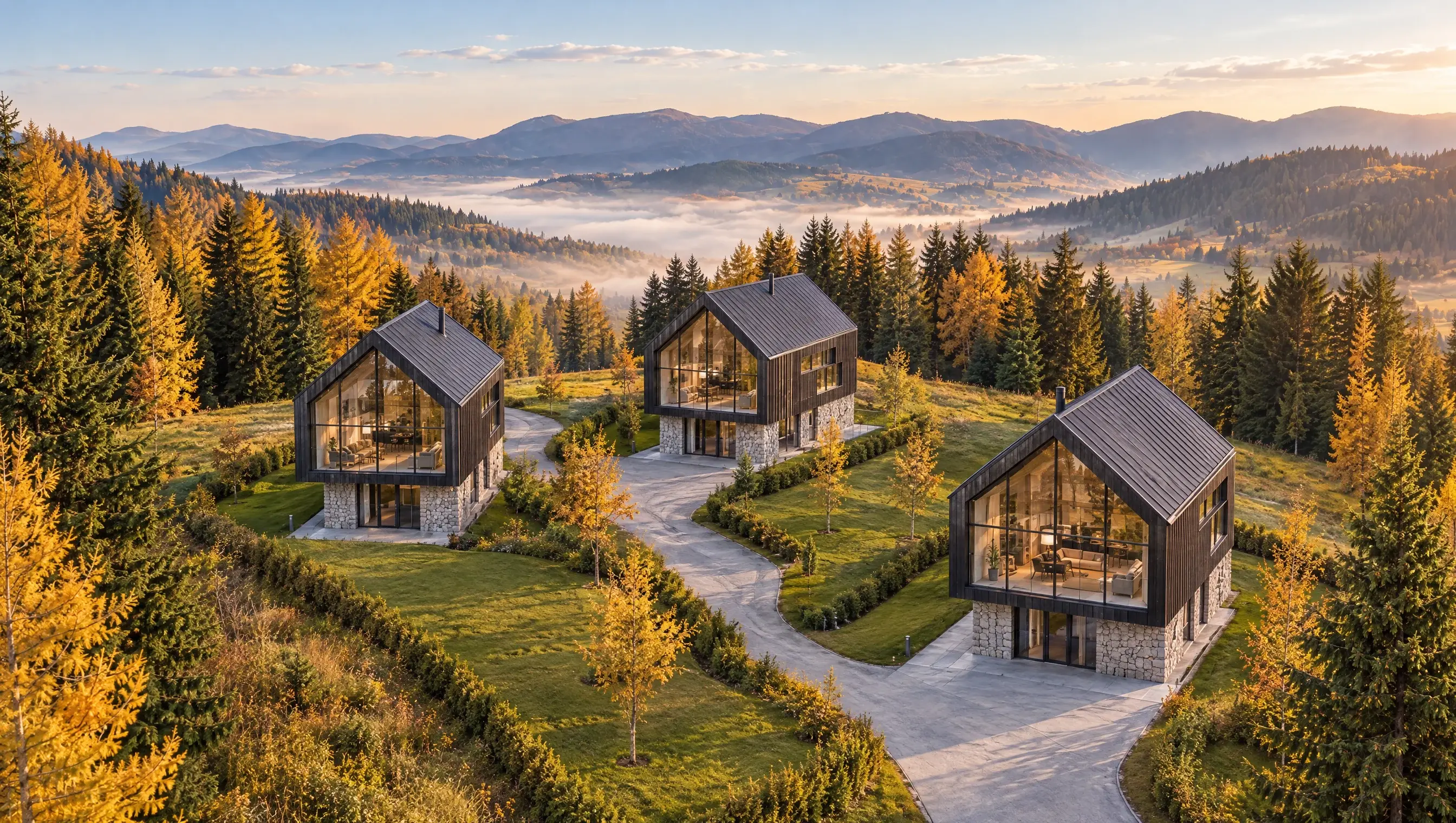
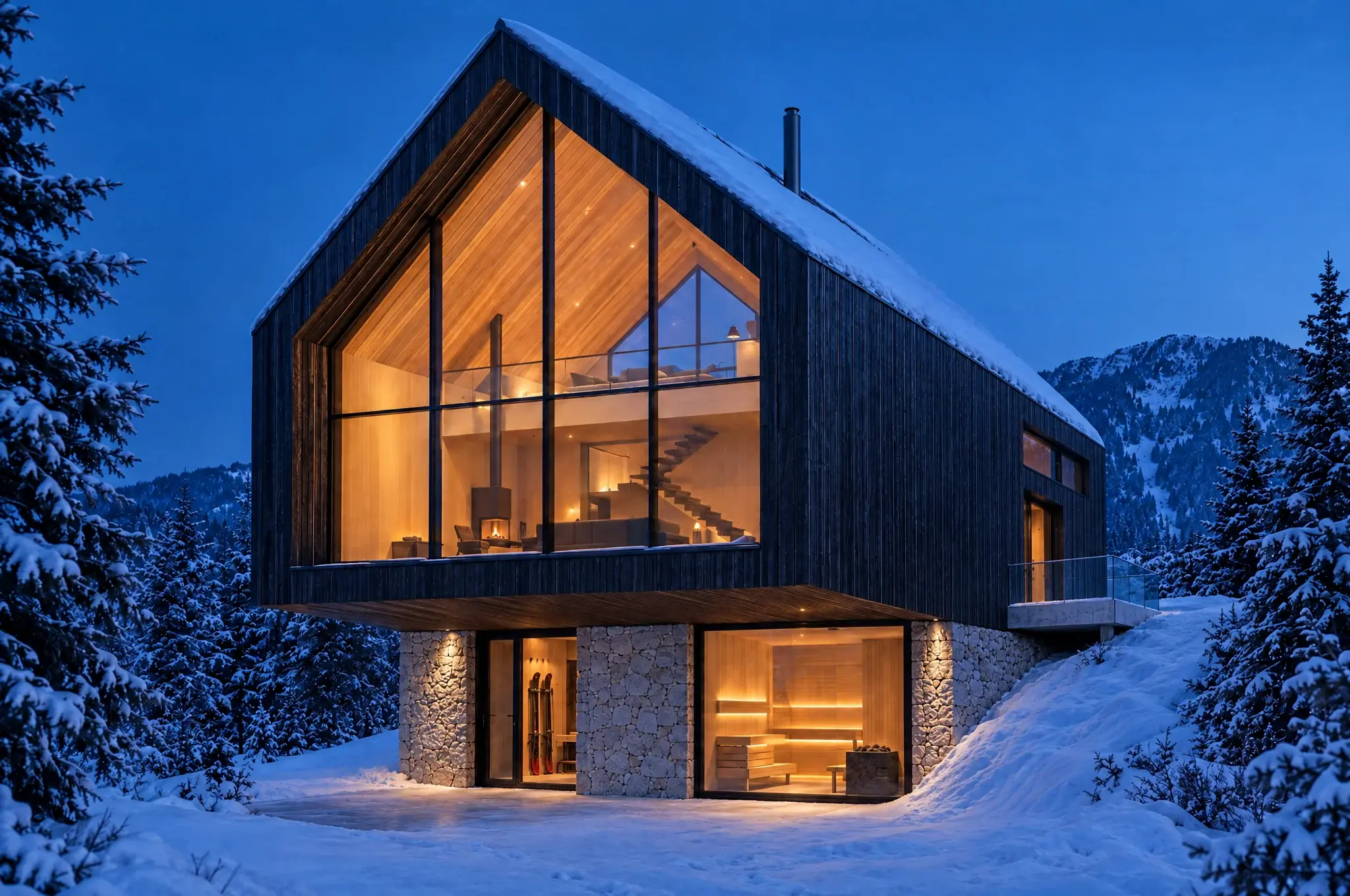
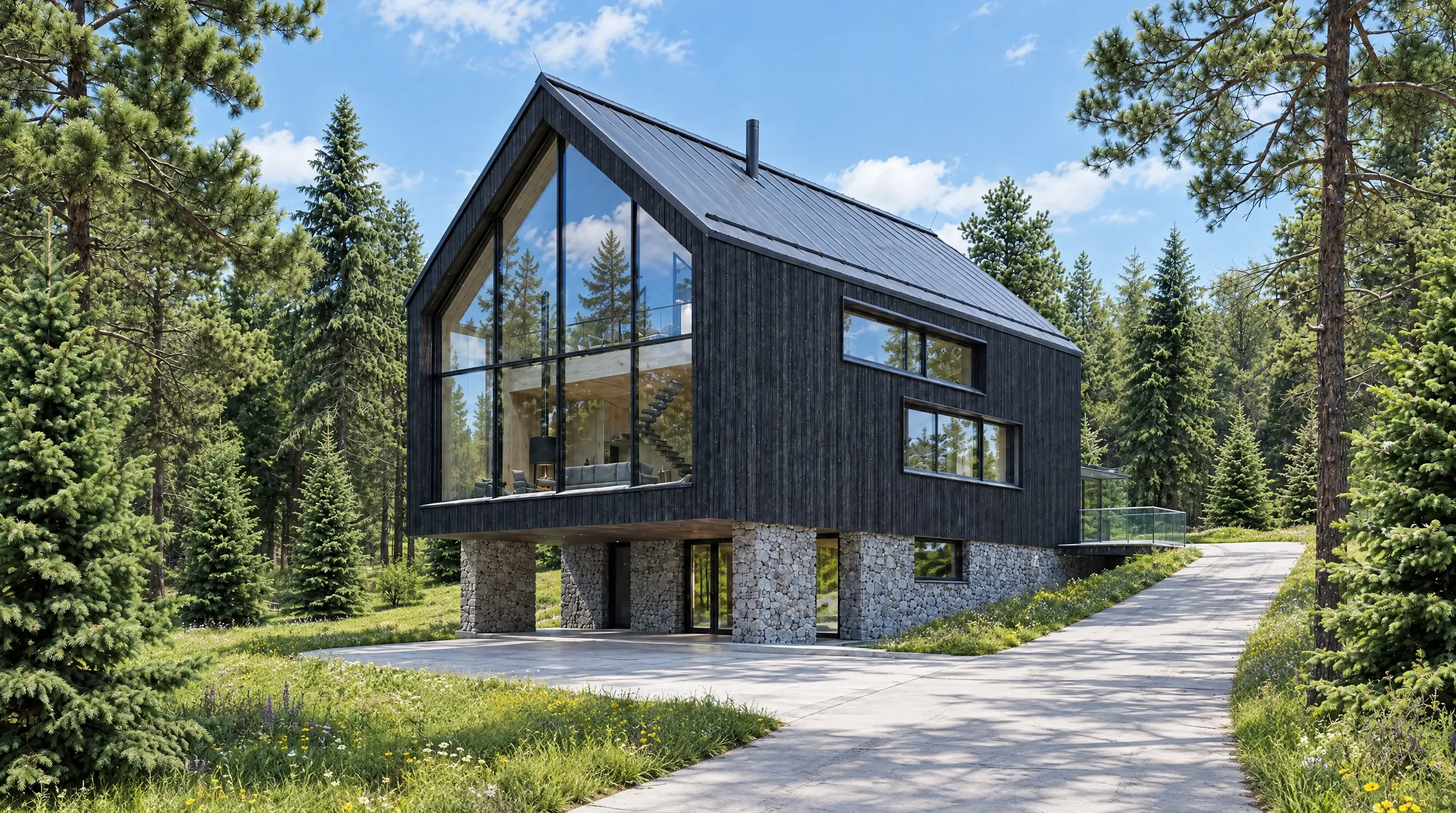
If you are buying with letting in mind, read whether a ski chalet is a good investment and what it costs to own one each year. NOVALY's chalets in Donovaly have four bedrooms, three bathrooms, a sauna and a ski room; see the chalets and their floor plans or ask us a question.